


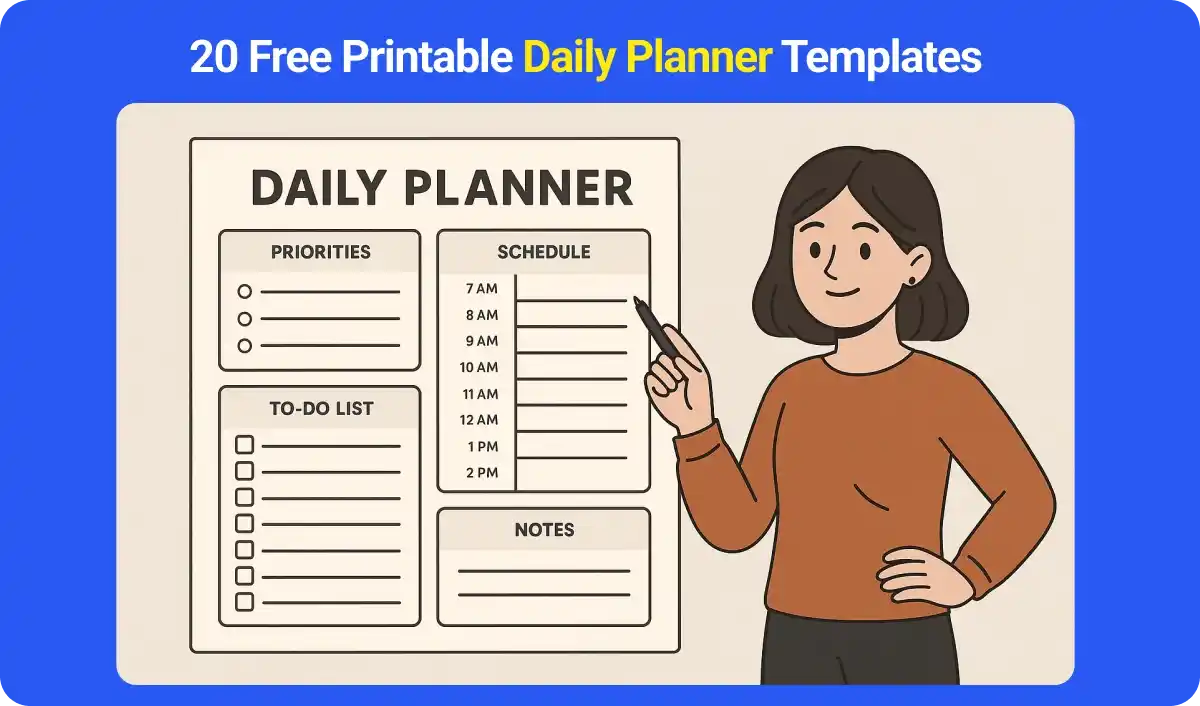


In a world overflowing with productivity advice, one tool stands out for its simplicity and effectiveness: the daily routine template. Whether you’re an entrepreneur managing multiple ventures, a professional juggling complex projects, or simply someone seeking better work-life balance, a well-designed template can be the difference between chaotic days and intentional living.
The challenge isn’t finding a template—it’s finding one that actually fits your life. Generic schedules promising miracle transformations often fail because they ignore a fundamental truth: productivity is deeply personal. What works for a Silicon Valley CEO won’t necessarily work for a freelance designer, working parent, or graduate student. This guide explores how to create and implement daily routine templates that adapt to your unique circumstances while providing the structure necessary for sustained success.
Understanding the Power of Template-Based Planning
Before diving into specific templates, it’s crucial to understand why this approach works. Daily routine templates provide what psychologists call “decision scaffolding”—a framework that reduces the cognitive burden of constant decision-making while maintaining flexibility for life’s inevitable surprises.
Research published in the Journal of Personality and Social Psychology demonstrates that individuals who use structured planning systems experience approximately 35% less decision fatigue compared to those who plan reactively. This preserved mental energy translates directly into better focus, creativity, and problem-solving capacity throughout the day.
Templates work because they automate the “what” and “when” of your day, freeing your mind to focus on the “how”—the actual execution and quality of your work. Instead of repeatedly asking yourself “what should I do next?” you follow a predetermined pattern that’s been optimized for your goals and energy patterns.
Core Components of an Effective Daily Routine Template
The most successful daily routine template incorporates several essential elements that work together to create a comprehensive system:
Time Blocks with Purpose
Rather than vague time allocations, effective templates assign specific purposes to time blocks. Morning hours might be reserved for high-concentration work, afternoons for meetings and collaboration, and evenings for reflection and planning. This purposeful allocation respects your natural energy rhythms—what chronobiologists call your circadian preferences.
For example, a morning person’s template might place complex analytical work between 8:00 AM and 11:00 AM, capitalizing on peak cognitive performance. A night owl, conversely, might reserve these same tasks for evening hours when their mental acuity peaks.
Flexible Boundaries
The paradox of effective templates is that rigid structure requires built-in flexibility. Life doesn’t respect perfect schedules—unexpected calls happen, meetings run long, and emergencies arise. Templates that work long-term include buffer time between major blocks and designated “flex hours” that can absorb scheduling disruptions without derailing the entire day.
Think of these buffers as shock absorbers in your schedule. A fifteen-minute gap between back-to-back commitments prevents the cascade effect where one delayed meeting throws off everything that follows.
Priority Anchors
Every template should include what productivity experts call “non-negotiable anchors”—activities so fundamental to your goals that they happen regardless of other circumstances. These might include morning exercise, focused work blocks on your most important project, family dinner time, or evening reflection practices.
Anchors provide stability when everything else feels chaotic. Even on your busiest, most unpredictable days, completing these anchored activities ensures progress toward your most important objectives.
Recovery and Restoration
Perhaps the most overlooked aspect of routine templates is intentional rest. High performers don’t simply work more—they recover more strategically. Templates should explicitly schedule breaks, including micro-breaks (5-10 minutes every hour), meal breaks that actually involve stepping away from work, and end-of-day wind-down routines.
The Pomodoro Technique, which structures work in focused 25-minute intervals followed by 5-minute breaks, exemplifies this principle. Regular rest intervals actually enhance sustained productivity rather than diminishing it.
Designing Templates for Different Professional Contexts
The beauty of template-based planning lies in customization. Here’s how different professional contexts require different template approaches:
Knowledge Workers and Professionals
For those whose work centers on thinking, writing, analysis, or creative output, templates should prioritize deep work blocks—extended periods (typically 90-120 minutes) of uninterrupted focus on cognitively demanding tasks. These blocks should occur during your peak mental performance hours and be protected from meetings, emails, and other interruptions.
A typical knowledge worker template might include: morning deep work (8:00-10:00 AM), administrative tasks and email (10:00-11:00 AM), meetings and collaboration (11:00 AM-1:00 PM), lunch and break (1:00-2:00 PM), afternoon focus work (2:00-4:00 PM), and wrap-up planning (4:00-5:00 PM).
Entrepreneurs and Business Owners
Entrepreneurial templates require exceptional versatility since roles constantly shift between strategic thinking, execution, communication, and problem-solving. The key is creating distinct “modes” within the template—CEO time for strategic decisions, maker time for product development, manager time for team coordination, and firefighter time for urgent issues.
Many successful entrepreneurs use what’s called “theme days” where specific weekdays focus on particular business aspects. Monday might center on planning and strategy, Tuesday and Wednesday on execution and creation, Thursday on meetings and partnerships, and Friday on review and optimization.
Parents and Caregivers
For those balancing professional responsibilities with caregiving, templates must explicitly integrate family commitments as equal priorities to work tasks. This might mean functional daily schedule templates for busy professionals that block early morning hours for personal productivity before children wake, midday for client work while kids are at school, and evenings reserved for family time.
The trick is avoiding the trap of treating family time as “leftover” time. When templates explicitly schedule family dinners, homework help, and bedtime routines with the same intentionality as work meetings, both areas receive proper attention.
Shift Workers and Non-Traditional Schedules
Not everyone works 9-to-5, and templates must accommodate varied schedules. Shift workers benefit from templates that adapt to rotating schedules while maintaining consistent patterns within each shift type. The key is identifying which routine elements remain constant (sleep duration, meal timing relative to wake time, exercise) and which must flex with schedule changes.
Implementing Your Template: From Theory to Practice
Creating a template is straightforward—implementing it consistently is the real challenge. Success requires a systematic approach:
Week One: Baseline Tracking
Before implementing a new template, spend one week tracking how you currently spend time. This baseline reveals patterns you might not consciously recognize—when you’re most focused, how long tasks actually take, where time vanishes, and which activities energize versus drain you.
This data becomes invaluable when designing your template, ensuring it aligns with reality rather than idealized assumptions about how you should work.
Week Two: Template Testing
Implement your initial template with the explicit understanding that it’s a prototype requiring refinement. Track what works, what doesn’t, and where friction occurs. Do you consistently skip your 6:00 AM workout? Perhaps you’re not actually a morning person. Do you never complete afternoon deep work? Maybe your energy dips then, and that time would better serve administrative tasks.
Week Three: Refinement
Using insights from testing, refine your template. Adjust time blocks to match your actual energy patterns. Modify activity sequences to create better flow. Add buffer time where scheduling conflicts arose. Remove elements that felt forced or inauthentic.
Week Four and Beyond: Consistency with Flexibility
Once refined, commit to your template for at least one month while maintaining flexibility for special circumstances. Consistency builds automaticity—that state where following your routine becomes second nature rather than requiring constant willpower.
Digital Tools: Bringing Templates to Life
While paper templates work for some, digital tools offer significant advantages for modern routine management. The ideal solution combines template structure with intelligent features that enhance rather than complicate planning.
Look for platforms that offer customizable templates while integrating with your existing calendar systems. The ability to set recurring time blocks, receive contextual reminders, and visualize your entire day in one interface dramatically reduces the friction of template adherence.
Modern productivity platforms can automatically adjust templates based on changing circumstances, suggest optimal task timing based on your patterns, and provide analytics showing how well you’re following your intended routine versus actual behavior.
Common Template Pitfalls and How to Avoid Them
Even well-designed templates fail when users make these common mistakes:
Over-Optimization: Creating templates so detailed and rigid that minor deviations feel like failures. Remember, the goal is helpful structure, not perfection.
Ignoring Energy Management: Scheduling demanding cognitive work during your natural energy dips, or failing to account for how different activities affect your energy levels.
Neglecting Adaptation: Treating your template as fixed rather than evolving. Life changes, goals shift, and effective templates evolve accordingly.
Forgetting Recovery: Packing every minute with productivity while neglecting rest, leading to burnout despite having an “optimized” schedule.
The Template Mindset: Structure as Freedom
Perhaps the most profound realization about template-based planning is understanding that structure creates freedom rather than constraining it. When routine activities follow predictable patterns, you create space for spontaneity, creativity, and presence in areas that truly matter.
You’re no longer wondering if you’ll find time for important projects—they’re scheduled. You’re not anxious about missing commitments—reminders ensure nothing falls through cracks. You’re not constantly choosing between competing priorities—your template reflects your values through its time allocations.
This mental freedom allows you to be fully present in whatever you’re doing. During focused work blocks, you work without guilt about other obligations. During family time, you engage completely without work anxiety. During rest periods, you recover without productivity shame.
Starting Your Template Journey
Begin simply. Choose just three elements to template initially: your morning routine, one core work block, and your evening wind-down. Master these before expanding to template additional portions of your day.
Remember that the perfect template doesn’t exist—only the template that works for you right now. As circumstances change, your template should evolve. This adaptability, combined with structural consistency, creates sustainable productivity that enhances rather than drains your life.
The most successful individuals don’t achieve more because they work harder—they achieve more because they’ve thoughtfully structured their time around what matters most. Daily routine templates provide that structure, transforming vague productivity aspirations into concrete, achievable patterns that compound over time into remarkable results.
Your template is more than a schedule—it’s a declaration of your priorities, a roadmap for your goals, and a system that supports the life you want to build. Design it thoughtfully, implement it consistently, and adjust it regularly. The time you invest in creating effective templates returns multiplied through clearer focus, reduced stress, and meaningful progress toward what matters most.


