
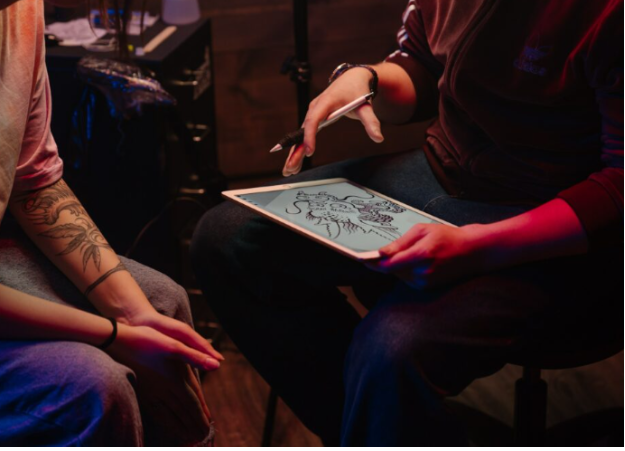

Getting a tattoo happens between the client and the artist. Somewhat intensely personal for you, the bigger goal is effective communication to convert your vision into an awesome, long-term piece of artwork instead of the painful and nagging experience of trying to get it done. Knowing what artists wish clients to know could smooth out the experience and make it more satisfying.
Be Specific About Your Concept
Artists appreciate precise and elaborate expressions from clients about their ideas, instead of saying, “I want something cool.” How about saying what it would look like, in the style it’s going to be done, what colors should go with it, and what it means to the client? Reference images, sketches, or inspiration boards can help the artist visualize your concept accurately.
Understand the Artist’s Specialty
Each tattoo artist has a different style and specialty that he or she can call forth. Some excel in realism, while others excel in geometric, traditional, or watercolor designs. Communicate your vision while remaining open to the artist’s suggestions, or she may adapt your ideas to suit the kind of flow you have going because tattoos are most successful when they work in harmony with your body’s natural contours.
Discuss Placement and Size Early On
Where and how big the tattoo is going to be directly affects the visibility, durability, and overall feel one would have of the tattoo. The artist would need to know where you want to place the design and what size you have in mind. They can advise on changes that would make the tattoo look visually better and more suitable for long-term wear.
Be Honest with Yourself about Pain Tolerance and Sessions
Your pain tolerance, coupled with your availability, will help the artist in planning their sessions. Because large or intricate tattoos usually do take multiple appointments, knowing your comfort level helps to ensure that every session will be manageable and enjoyable.
Ask Questions and Accept Feedback
Communication is a two-way street. Do not hesitate to ask questions about the design, technique, or aftercare. Engaging a client in that way is a favorite with artists, as it makes the person interested and dedicated to getting the best possible outcomes.
Trust in the Collaborative Process
After being able to articulate the vision clearly, there is still the need to trust the artist. With their professional expertise, refining ideas or suggesting improvements usually leads to producing something much better than expected.
Final Thoughts
Clear communication thus changes the tattoo from a mere idea to a personalized masterpiece. Apart from being specific, he should also understand the artist’s expertise, discuss placement and size, and ask questions to get the best possible outcome. Collaboration, honesty, and trust will all contribute toward getting a meaningful and magnificent tattoo.
This post was written by J Michael Taylor. J Michael Taylor is an artist and the owner of Black Amethyst Tattoo Gallery. Looking for Tattoo shops in St Petersburg, Florida? Black Amethyst has you covered! They provide an art-first approach to custom tattooing in a gallery setting.